Stalled Autoimmune Flare Turned Around With Ozone Therapy

An autoimmune flare that will not settle, despite months of medication adjustments and elimination diets, often responds when the underlying inflammation and oxidative stress are addressed directly, and for a growing number of patients, medical-grade ozone therapy given as a structured six-week protocol is the piece that finally moves the needle. At Mind And Body Solutions in Webster, TX, we see this pattern often enough that it has become part of how we approach stubborn, stalled flares in our functional medicine practice.
If you are reading this because your joints, gut, thyroid, or skin have been in an uncooperative flare for weeks or months, you already know the frustration of being told your labs "look fine" while your body says otherwise. You are not imagining it, and you are not out of options.
The Problem: When an Autoimmune Flare Won't Quit
A stalled autoimmune flare is a period of active symptoms, joint pain, fatigue, gut distress, skin eruptions, or thyroid dysfunction, that fails to respond to standard medication adjustments and lingers well past the typical two-to-four-week window. For many of our patients in the Houston and Webster area, this looks like a Hashimoto's, rheumatoid arthritis, lupus, or psoriatic condition that was previously managed reasonably well suddenly refusing to calm down.
The symptoms compound on each other. Chronic fatigue makes it hard to exercise or cook balanced meals, which worsens gut inflammation, which in turn aggravates the autoimmune response, which deepens the fatigue. Patients tell us they feel like they are managing a full-time job just to get through the day, on top of an actual job.
Conventional care often treats the immune system in isolation, adjusting immunosuppressants or biologics without addressing what is fueling the flare underneath: chronic oxidative stress, hidden infections, gut permeability, or mitochondrial exhaustion. When those root drivers are never investigated, patients cycle through medication changes for months without real resolution.
This is where a stalled flare becomes more than a physical problem. It erodes trust in the healthcare system, and by the time patients reach our clinic, many have already been told their case is "complicated" or that they simply need to wait it out. That answer is not good enough, and it is not one we accept either.
What Is Ozone Therapy and How Is It Administered?
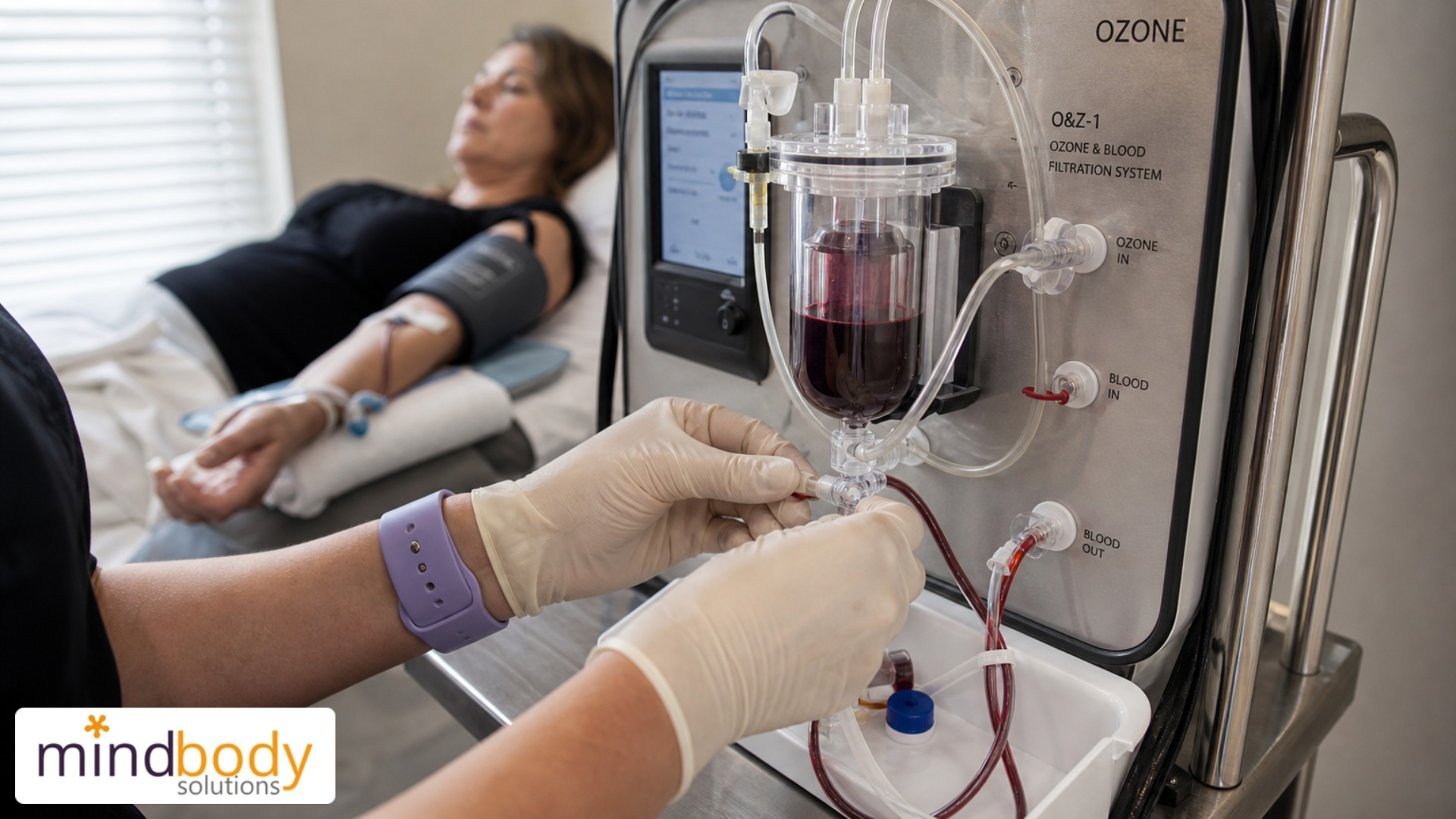
Ozone therapy is a medical treatment that introduces a precise, medical-grade mixture of ozone (O3) and oxygen into the body to stimulate antioxidant defenses, improve oxygen utilization, and modulate an overactive immune response. It is administered using a calibrated ozone generator, sometimes called an ozone therapy machine, that produces ozone from medical-grade oxygen through a corona discharge process, with the concentration measured precisely in micrograms per milliliter (µg/mL).
The most common delivery method for autoimmune flares is major autohemotherapy (MAH): a small amount of the patient's own blood is drawn, mixed with the ozone-oxygen gas in a sterile, closed system, and then returned to the body intravenously. Some protocols use what is known as 10-pass ozone therapy, which cycles a larger blood volume through the ozonation process in ten sequential passes for a more concentrated effect.
Other administration routes exist depending on the condition, including rectal insufflation, ozonated saline, and localized ozone applications, and this is also the delivery category that includes ozone therapy dental applications, where ozonated water or oil is used to address oral bacteria and gum inflammation. At Mind And Body Solutions, our functional medicine team selects the delivery method, concentration, and frequency based on each patient's labs, flare severity, and overall health picture rather than applying a single protocol to everyone who walks through our Webster clinic.
A typical course for a stalled autoimmune flare runs two sessions per week for four to six weeks, with concentration and blood volume adjusted session to session as the patient's inflammatory markers and symptoms shift.
Why Ozone Therapy Can Help Calm an Autoimmune Flare
Ozone therapy benefits patients with stalled autoimmune activity primarily by triggering a controlled, mild oxidative stress response that upregulates the body's own antioxidant enzyme systems, including glutathione peroxidase and superoxide dismutase. In simpler terms, it retrains the body to defend itself more efficiently rather than staying stuck in a chronic inflammatory loop.
This matters for autoimmune conditions because much of the tissue damage in a flare comes not from the initial trigger but from the ongoing oxidative stress and cytokine signaling that keeps the immune system on high alert. By improving mitochondrial oxygen utilization, ozone therapy can also address the profound fatigue that accompanies most autoimmune flares, since fatigue in these conditions is frequently tied to poor cellular energy production rather than simple tiredness.
Ozone therapy has also been studied for its effect on circulation and tissue oxygenation, which supports faster resolution of localized inflammation in joints and gut lining. For patients managing thyroid disorders or perimenopause-related inflammation alongside an autoimmune diagnosis, which describes a large share of the women we see at our Webster clinic, this combined effect on inflammation and energy metabolism often produces noticeable relief within the first two to three weeks of treatment.
None of this replaces a full functional medicine workup. Ozone therapy works best as one component alongside gut healing protocols, targeted nutrient repletion, and hormone balancing, which is why our team always builds it into a broader treatment plan rather than offering it as a standalone service.
The Six-Week Turnaround: What Progress Actually Looks Like
A six-week ozone therapy protocol for a stalled autoimmune flare typically moves through three distinct phases: initial stabilization in weeks one and two, active symptom reduction in weeks three and four, and functional recovery in weeks five and six. This staged pattern is one we see repeatedly in patients whose flares had not responded to months of standard medication adjustments alone.
Weeks One and Two: Stabilization
In the first two weeks, sessions focus on lower ozone concentrations to assess patient tolerance while running comprehensive labs, including inflammatory markers, thyroid panels, and gut permeability testing where indicated. Most patients report modest improvements in sleep quality and a slight reduction in joint stiffness during this phase, even before major symptom changes appear.
Weeks Three and Four: Active Reduction
By the third week, concentration and session frequency are adjusted based on the patient's response, and this is typically when patients notice the clearest shifts: reduced joint swelling, calmer digestion, fewer flare-related skin eruptions, and a measurable increase in daily energy. For a patient managing a Hashimoto's flare alongside chronic fatigue, a scenario we see often in our Webster practice, this is frequently the point where thyroid-related brain fog begins to lift.
Weeks Five and Six: Functional Recovery
The final two weeks focus on consolidating gains and tapering session frequency while introducing supportive nutrition and lifestyle changes designed to maintain the improvement long-term. Patients at this stage are usually back to normal work and activity levels, with inflammatory markers trending toward baseline on repeat labs.
The outcome our team looks for by week six is not just symptom relief but a flare that has genuinely resolved, meaning the patient can return to standard maintenance care rather than staying in constant crisis management.
Is Ozone Therapy Backed by Research?
Ozone therapy has a growing body of published research on PubMed examining its effects on oxidative stress modulation, antimicrobial activity, and inflammatory signaling, though the research base is still smaller than for many conventional pharmaceutical treatments. Mainstream institutions such as the Mayo Clinic have historically taken a cautious position, noting that ozone gas itself is toxic if inhaled directly and that the U.S. Food and Drug Administration has not approved ozone therapy as a treatment for any medical condition.
We think patients deserve that context rather than marketing hype. Medical-grade ozone therapy, delivered through controlled methods like autohemotherapy rather than direct inhalation, is a different application than the toxicity concerns referenced in general ozone gas warnings, and this distinction is central to how our clinical team administers it safely.
Because the evidence base is still developing, we use ozone therapy as part of an individualized, integrative plan rather than positioning it as a stand-alone cure for autoimmune disease. Patients considering it should ask any provider, including ours, direct questions about session protocols, concentration levels, and how progress will be measured through follow-up labs.
What Should You Expect at Mind And Body Solutions?
Patients searching "ozone therapy near me" in the Houston and Webster area can expect a functional medicine evaluation first, not a walk-in ozone session, because treatment only works when it targets the actual driver of the flare. Our team has treated thousands of patients with chronic fatigue, autoimmune conditions, thyroid disorders, and hormonal imbalance from our Genesis Blvd clinic, and every ozone protocol we design starts with a full review of labs, symptom history, and prior treatment attempts.
A first visit typically includes comprehensive lab work, a detailed intake covering flare history and prior medications, and a discussion of whether ozone therapy fits alongside other functional medicine interventions like gut repair, nutrient IV therapy, or hormone balancing. If ozone therapy is appropriate, we walk through concentration levels, expected session frequency, and realistic timelines, generally the four-to-six-week course described above, before starting treatment.
Our Webster location at 210 Genesis Blvd, Suite C, serves patients across the greater Houston area, and our team is available at 281-616-3816 or info@nutrition-houston.com to answer questions before you ever book a session.
Conclusion: From Stalled Flare to Steady Progress
A flare that has resisted months of standard treatment does not mean you are out of options, it means the current plan is missing a piece. The contrast between a patient stuck in week four of an unresponsive flare and that same patient six weeks into a properly monitored ozone therapy protocol, sleeping better, moving without stiffness, and thinking clearly again, is exactly why our team continues to build ozone therapy into carefully individualized treatment plans at Mind And Body Solutions.
If your autoimmune flare has stalled and conventional adjustments have not helped, our functional medicine team in Webster, TX is ready to review your history and labs to determine whether ozone therapy belongs in your recovery plan. Call 281-616-3816, email info@nutrition-houston.com, or visit nutrition-houston.com to schedule an evaluation with our team.
Frequently Asked Questions
What is the difference between 10-pass ozone therapy and standard major autohemotherapy?
Standard major autohemotherapy (MAH) draws a smaller blood volume, mixes it once with the ozone-oxygen gas, and returns it intravenously in a single cycle. 10-pass ozone therapy runs a larger blood volume through the ozonation process across ten sequential cycles, producing a more concentrated therapeutic effect. Our team chooses between the two based on flare severity, lab findings, and how a patient tolerates initial sessions.
How do I know if my autoimmune flare qualifies for the six-week ozone protocol?
Eligibility is determined through a functional medicine evaluation, not a walk-in session, starting with comprehensive labs, a review of flare history, and a discussion of prior medication attempts. Patients whose flares have lingered past the typical two-to-four-week window despite standard adjustments are the ones we most often see benefit from a structured protocol. This assessment happens before any ozone treatment is scheduled at our Webster clinic.
How does ozone therapy compare to just adjusting my biologics or immunosuppressants?
Adjusting biologics or immunosuppressants targets the immune system directly but often leaves underlying drivers like oxidative stress, gut permeability, or mitochondrial exhaustion unaddressed. Ozone therapy works differently by upregulating the body's own antioxidant enzyme systems and improving cellular oxygen use, which can calm the inflammatory loop feeding the flare. We generally use it alongside, not instead of, appropriate medication management as part of a broader functional medicine plan.
How many ozone therapy sessions per week are needed, and where can I get this in the Houston area?
A typical protocol for a stalled flare runs two sessions per week for four to six weeks, with concentration and blood volume adjusted as inflammatory markers and symptoms shift. Mind And Body Solutions offers this treatment at 210 Genesis Blvd, Suite C in Webster, serving patients throughout the greater Houston area. You can call 281-616-3816 to discuss scheduling before booking an evaluation.
What happens if my inflammatory markers haven't improved by the end of the six weeks?
Because concentration and frequency are reassessed session to session using repeat labs, our team can extend or modify the protocol if markers aren't trending toward baseline by week six. Ozone therapy is built into a broader plan alongside gut healing, nutrient repletion, and hormone balancing, so a slower response usually points to adjusting one of those other components rather than abandoning the approach. Follow-up labs at each phase are what guide that decision rather than a fixed calendar.