Does Ozone IV Therapy Actually Work, or Is It Just Hype?
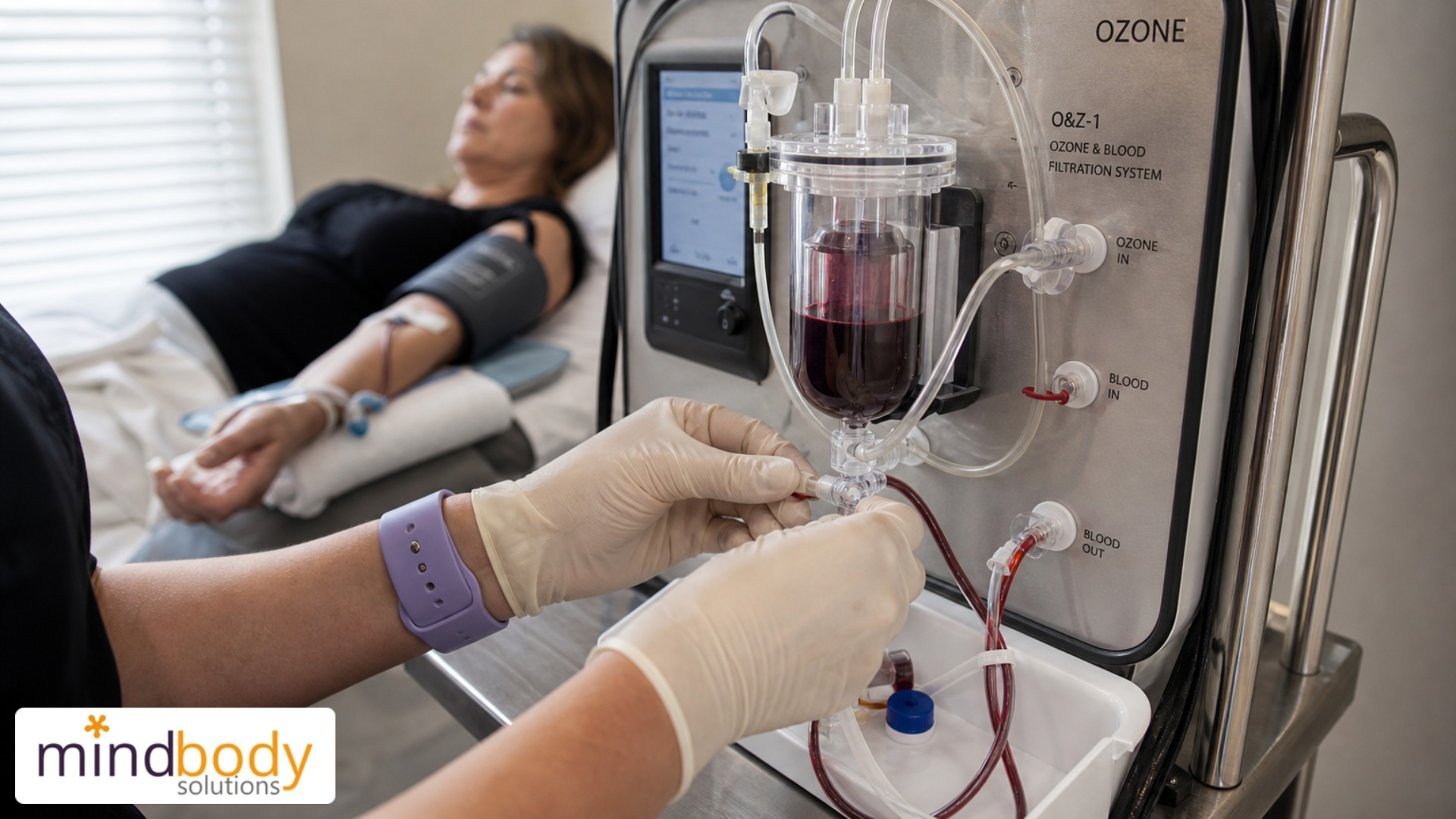
Ozone IV therapy, including EBOO treatment (Extracorporeal Blood Oxygenation and Ozonation), has been studied in laboratory and small clinical settings, but it is not a proven treatment for any condition — the honest answer is that its proponents describe it as a supportive tool for oxygenation and detoxification, and that role has not been confirmed in large controlled trials. At Mind And Body Solutions in Webster, TX, we’ve walked thousands of Houston-area patients through integrative options like this, and our job is to give you the real picture: what the research actually shows, who tends to ask about it, and where the evidence still falls short. Ozone therapy, EBOO included, is not FDA-approved to treat any condition, and the FDA's regulations describe ozone as a toxic gas with no known useful medical application. Patients' experiences vary, and no result is promised.
What Is Ozone IV Therapy and How Is It Administered?
Ozone IV therapy involves exposing a patient’s blood to medical-grade ozone gas before returning it to the body, with the goal of temporarily boosting oxygen utilization and triggering antioxidant responses. The most common modern method is EBOO therapy (also called EBO2 therapy), in which blood is drawn, run through a specialized filtration and ozonation device, and reinfused in a closed loop over roughly 45 to 90 minutes.
Older methods involved smaller ozone blood treatment volumes drawn and reinjected manually, but EBOO treatments process a much larger portion of circulating blood, which practitioners believe produces a stronger, more consistent effect, though that has not been shown in controlled trials. Sessions are typically administered in a clinical setting under supervision, using calibrated ozone generators — precision matters, since ozone concentration and exposure time directly affect both safety and outcome.
What Does the Science Actually Say About Ozone Therapy Benefits?
The evidence is limited: laboratory and small studies describe proposed mechanisms, like mild oxidative stress triggering antioxidant enzyme production, while robust, large-scale human trials showing the claimed benefits are lacking. A NIH ozone therapy research review examining pharmacodynamics and clinical utility notes plausible biological mechanisms but calls for more rigorous studies before ozone therapy can be considered standard treatment for most conditions.
At the same time, regulators urge caution. The FDA ozone therapy warning states plainly that ozone gas has no proven medical benefit for the conditions it’s often marketed to treat and carries real toxicity risks if mishandled. A Cleveland Clinic ozone overview echoes this, describing how the therapy is administered while flagging serious safety concerns, including lung injury from improper delivery. We share these sources with patients directly because functional medicine should never mean skipping the science.
Who in Houston Typically Seeks Out EBOO Therapy?
Most patients who ask us about EBOO therapy are dealing with persistent, hard-to-diagnose symptoms that conventional medicine hasn’t fully resolved. In our Webster, TX clinic, that usually means adults 35 to 55 with chronic fatigue, women navigating hormonal imbalance or perimenopause, and professionals managing chronic stress alongside brain fog tiredness.
We also see patients 45 to 65 with autoimmune conditions or thyroid disorders who have tried multiple providers without clear answers. If you’ve been told your labs are “normal” but you still feel exhausted, foggy, or off, you’re not imagining it — and you’re exactly the kind of patient functional medicine is built to help through deeper root-cause investigation rather than symptom management alone.
Can Ozone Therapy Help With Brain Fog, Fatigue, and Chemical Imbalance?
Ozone therapy has not been shown in controlled trials to improve mental fogginess and fatigue, and it does not “fix” a chemical imbalance. Its proponents describe it as supporting oxygenation and circulation, which has not been confirmed as a treatment benefit. Fatigue and mental fog are often downstream symptoms of several overlapping issues — poor cellular oxygen delivery, inflammation, imbalanced neurotransmitters, thyroid dysfunction, or unmanaged chronic stress.
Chemical imbalance symptoms like irritability, poor concentration, and low motivation frequently overlap with fatigue, which is why we never treat brain fog as an isolated complaint. Some patients report feeling sharper for a while after EBOO blood treatment; that is individual experience, not something controlled trials have shown. Lasting improvement usually depends on nutrient repletion, hormone testing, and addressing the actual driver — whether that’s thyroid function, gut health, or neurotransmitter support.
Could Hidden Infections or Thyroid Issues Be Behind Your Fatigue and Weight Gain?
Yes — chronic low-grade infections and thyroid dysfunction are two of the most overlooked contributors to unexplained fatigue and stubborn weight gain. Patients often ask us, can infections cause weight gain, and the answer is that persistent infections can drive systemic inflammation, disrupt hormone signaling, and slow metabolism over time.
We also frequently see what patients describe as “Hashimoto’s belly” — stubborn thyroid upper belly fat tied to Hashimoto’s thyroiditis, an autoimmune thyroid condition common among women 35 to 55 in our Webster, TX patient population. Ozone IV therapy is sometimes promoted as a detoxification tool for these patients, which controlled trials have not shown it to be, and it should never replace proper thyroid antibody testing, infection screening, and a full functional medicine workup.
What Does Ozone IV Therapy Cost, and Is It Covered by Insurance?
Ozone IV therapy cost typically ranges from $150 to $300 per session depending on the method (manual ozone blood treatment versus full EBOO treatment) and how many sessions your provider recommends. Most insurance plans do not cover ozone therapy because it remains classified as investigational rather than an FDA-approved standard treatment, so most Houston-area patients pay out of pocket.
When you’re comparing ozone therapy reviews or searching “ozone IV therapy near me,” ask directly about total treatment plan cost, not just the per-session price — some clinics recommend six or more sessions before evaluating results, which changes the real investment significantly.
Who Is a Good Candidate for EBOO Treatments — and Who Isn’t?
The adults who usually ask about it have chronic fatigue, low-grade inflammation, or sluggish circulation; anyone considering it should have completed baseline lab work and not have contraindications like G6PD deficiency, active bleeding disorders, or hyperthyroidism. EBOO treatments are not appropriate for pregnant patients, people with untreated hyperthyroid conditions, or anyone with a known ozone sensitivity.
Like most interventions, ozone therapy advantages and disadvantages should be weighed with a qualified provider who reviews your full medical history first. This is where the “hype” concern is legitimate — no reputable clinic should offer ozone therapy as a first-line treatment or guarantee a cure; it belongs in a broader, individualized plan.
Is Ozone IV Therapy Hype, or Is It Legitimate Functional Medicine?
Ozone IV therapy is not a miracle cure — it’s an adjunctive therapy whose claimed benefits have not been confirmed in large controlled trials, and it is not FDA-approved for any condition. If it is considered at all, it belongs as one piece of a comprehensive functional medicine plan rather than a standalone answer. The honest, evidence-based approach means testing for root causes first — thyroid antibodies, infections, hormone panels, nutrient deficiencies — and using tools like EBOO therapy only where they genuinely fit your case.
At Mind And Body Solutions, we’ve built our reputation in natural health Houston and Clear Lake integrative medicine circles on this kind of straight talk, not overselling one therapy as a universal fix. If you’re dealing with unexplained fatigue, brain fog, thyroid symptoms, or stubborn weight that hasn’t responded to conventional care, our Webster, TX team can help you figure out what’s actually driving it — and whether ozone therapy has a reasonable place in your plan. Call us at 1-281-616-3816 or visit nutrition-houston.com to schedule a consultation and get answers built on evidence, not hype.
Frequently Asked Questions
What’s the difference between EBOO therapy and older ozone blood treatment methods?
EBOO (Extracorporeal Blood Oxygenation and Ozonation) runs a much larger volume of blood through a specialized filtration and ozonation device in a closed loop over 45 to 90 minutes, while older methods manually drew and reinjected smaller amounts of blood. Practitioners believe EBOO’s higher processing volume produces a stronger, more consistent effect, though that has not been shown in controlled trials; both approaches are administered under clinical supervision with calibrated equipment.
How many EBOO sessions does a Houston clinic typically recommend?
There is no established number of sessions; some clinics recommend six or more before evaluating whether anything has changed, which significantly changes the total cost beyond the per-session price of $150 to $300. Before starting treatment, ask your provider for the full treatment plan cost upfront rather than just the individual session rate.
Should I try ozone IV therapy or get thyroid antibody testing first for unexplained fatigue?
Thyroid antibody testing, infection screening, and hormone panels should come first, since conditions like Hashimoto’s thyroiditis are a common and overlooked driver of fatigue and stubborn weight gain, particularly the “Hashimoto’s belly” pattern seen in women 35 to 55. Ozone therapy has not been shown to work as a detoxification tool and should never substitute for identifying the actual root cause through proper lab work.
Who should avoid EBOO treatments due to medical contraindications?
EBOO treatments are not appropriate for pregnant patients, people with untreated hyperthyroid conditions, or anyone with a known ozone sensitivity. Additional contraindications include G6PD deficiency and active bleeding disorders, which is why baseline lab work and a full medical history review with a qualified provider are required before treatment.
Ozone therapy is not a proven fix for brain fog, so what actually addresses it long-term?
Lasting improvement in brain fog is not something EBOO has been shown to deliver in controlled trials; it typically depends on nutrient repletion, hormone testing, and treatment of the actual underlying driver — whether that’s thyroid dysfunction, gut health issues, or neurotransmitter imbalances. Fatigue and mental fog are usually downstream symptoms of overlapping issues, so isolated treatments rarely resolve them without a broader functional medicine workup.