Stop Fearing Needles: Ozone Therapy Is IV Therapy's Future

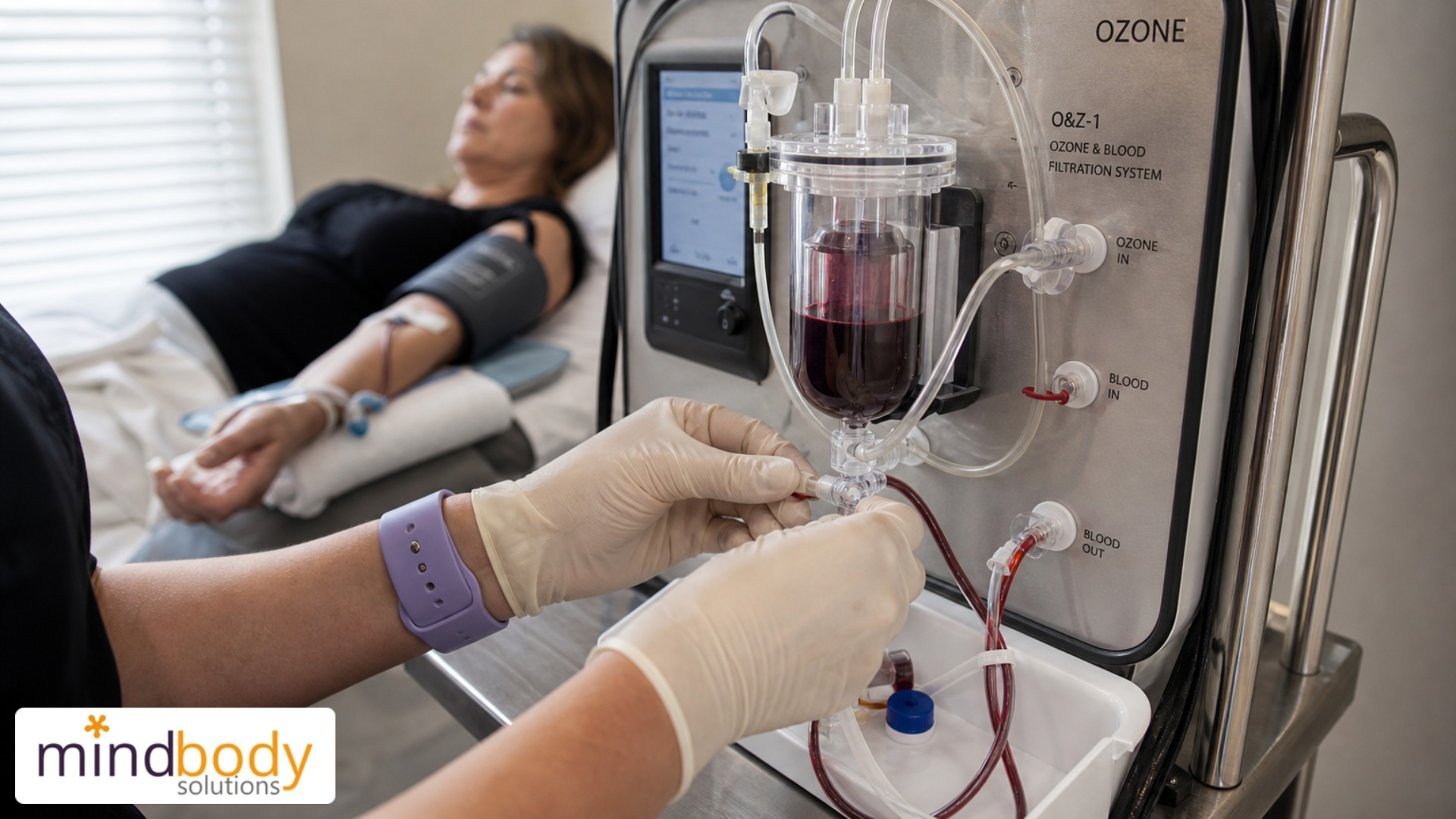
Ozone blood treatment (also called ozone therapy or major autohemotherapy) is a medical procedure in which a small amount of a patient's blood is drawn, infused with a precise concentration of medical-grade ozone gas, and returned to the body through an IV. Despite decades of clinical use in Europe and a growing body of research in the United States, ozone blood treatment still carries a reputation problem built on outdated fears and simple misinformation. At Mind And Body Solutions in Webster, TX, we want to correct the record so Houston-area patients can make an informed decision about whether this therapy belongs in their functional medicine plan.
Myth: Ozone Blood Treatment Is Too Dangerous to Try
Reality: When administered by trained clinicians using medical-grade equipment and precise dosing protocols, ozone blood treatment carries a well-documented safety profile. The fear usually stems from confusing ozone therapy with breathing ozone gas directly, which is genuinely harmful to the lungs. Ozone blood treatment never involves inhaling the gas.
Instead, ozone is mixed with a small, withdrawn sample of the patient's own blood outside the body in a sealed, sterile system, then reintroduced through standard IV technique. The Cleveland Clinic ozone overview confirms that this closed-loop method is central to how the therapy is delivered safely in clinical settings, and outlines the specific side effects and regulatory status patients should discuss with their provider beforehand. Research published through the NIH has also examined dose-response relationships, finding that ozone's biological effects follow what's called a hormetic curve, meaning the correct low dose produces a therapeutic antioxidant response, while excessive concentrations do not improve results and can cause oxidative stress. That's precisely why dosing precision, not the presence of ozone itself, is what separates a safe treatment from a risky one.
Myth: The Needles Make Ozone Therapy More Painful Than Regular IV Therapy
Reality: Ozone blood treatment uses the exact same needle gauge and IV insertion process as any standard blood draw or vitamin infusion. There is nothing about the ozone step itself that changes what a patient feels during the procedure.
A typical major autohemotherapy session involves drawing roughly 100 to 200 milliliters of blood into a sterile IV bag, gently mixing it with ozone and oxygen inside that closed bag, and reinfusing it over 20 to 30 minutes. Patients who have had blood drawn for routine labs, or who have received a standard IV vitamin drip, already know exactly what to expect. The lingering fear of "needles for ozone" is really a fear of needles in general, and it doesn't hold up once someone understands that the process mirrors procedures millions of people undergo every year without incident. Our clinical team walks every new patient through the process step by step before the first session, which is often enough on its own to put the anxiety to rest.
Myth: Ozone Therapy Isn't Backed by Real Medical Research
Reality: Peer-reviewed research, including studies published through the National Institutes of Health, has measured real physiological effects from systemic ozone therapy, even though it remains an area of active study rather than a universally standard-of-care treatment. Patients searching for "ozone therapy Mayo Clinic" often land on cautious language, and that caution is fair. Major institutions rightly note that ozone therapy is not FDA-approved as a first-line treatment for any disease, and we tell our patients the same thing directly.
But "not first-line" is different from "not studied." The NIH systemic ozone study documented measurable improvements in patients' self-reported quality of life following a course of treatment, while the NIH ozone blood mechanism research details how controlled ozone exposure triggers the body's own antioxidant enzyme systems and modulates immune signaling. This is why we position ozone blood treatment as a complementary tool inside a broader functional medicine plan, alongside nutrition, hormone testing, and lifestyle changes, rather than as a stand-alone cure. That distinction matters for anyone comparing marketing claims against what the evidence actually supports.
Myth: Ozone Blood Therapy Only Helps Skin Problems
Reality: While ozone therapy benefits for skin, such as improved circulation and support for wound healing, are real and well documented, systemic ozone blood treatment is used far more broadly for fatigue, immune support, and inflammatory conditions. Skin-focused ozone applications, like ozonated oils or localized treatments, are a completely different delivery method than the IV-based major autohemotherapy discussed here.
Many of the patients who come to our Webster, TX clinic are adults between 35 and 65 dealing with chronic fatigue, undiagnosed digestive complaints, thyroid imbalances, or the immune dysregulation common in autoimmune conditions. For these patients, the appeal of ozone blood treatment lies in its proposed effects on oxygen utilization and mitochondrial function, not skin appearance. We pair it with comprehensive lab work, because in functional medicine, addressing root causes like hormonal imbalance or chronic inflammation always takes priority over treating a single symptom in isolation. Ozone blood therapy benefits reported by patients most often include improved energy and mental clarity within a course of several sessions, though individual results vary and should always be discussed against a person's full health picture.
Myth: Ozone Blood Therapy Is Too Expensive to Be Worth It
Reality: Ozone blood therapy cost is comparable to other professionally administered IV therapies, and most clinics structure pricing around individual sessions or discounted treatment packages rather than one flat fee. Nationally, a single major autohemotherapy session commonly falls in the range of $150 to $300, with many patients completing a series of 8 to 10 sessions over several weeks for sustained benefit.
The "too expensive" myth often comes from comparing ozone therapy to a routine doctor's visit rather than to what it actually replaces for many patients: months or years of unresolved symptoms, repeated specialist visits, and medications that manage symptoms without addressing the underlying cause. At Mind And Body Solutions, we discuss cost transparently during a patient's initial functional medicine consultation, so there are no surprises once a personalized plan is built. We'd rather a Houston-area patient understand the full financial picture upfront than discover it session by session.
Myth: All Ozone Therapy Machines and Clinics Offering "Ozone Therapy Near Me" Are the Same
Reality: The quality and safety of ozone blood treatment depends heavily on the specific ozone therapy machine used, the training of the administering clinician, and the precision of the dosing protocol, so not every provider delivers an equivalent experience. A quick search for "ozone therapy near me" turns up a wide range of providers, from medical spas to functional medicine clinics to standalone IV bars, and their equipment and clinical oversight vary significantly.
Medical-grade ozone generators allow for exact, calibrated concentrations measured in micrograms per milliliter, which is what allows a clinician to stay within the therapeutic dose range described in the NIH mechanism research cited above. Our team at Mind And Body Solutions has treated thousands of patients across Houston and Webster, TX, and every ozone protocol is built on individual lab results and health history, not a one-size-fits-all volume setting. Before choosing any provider, ask directly what equipment they use, how they calibrate dosing, and how many ozone sessions they've administered. Ozone blood therapy reviews are useful for gauging patient experience, but they should never replace a direct conversation with your provider about credentials and process.
Getting the Facts Straight on Ozone Blood Treatment
Ozone blood treatment is not the reckless, unregulated procedure its myths suggest, nor is it a miracle cure that works the same way for everyone. The reality sits in between: a carefully dosed, IV-delivered therapy with a growing research base, real reported benefits for energy and inflammation, and a safety profile that depends heavily on the skill of the provider administering it. For adults in the Houston area managing chronic fatigue, hormonal imbalance, thyroid disorders, or autoimmune symptoms, understanding how ozone therapy is administered, and who is administering it, matters more than the fear that keeps many people from asking the question in the first place.
If you're curious whether ozone blood treatment fits into your own health picture, the team at Mind And Body Solutions is ready to talk it through honestly, based on your labs and history, not on marketing claims. Call us at 1-281-616-3816, email info@nutrition-houston.com, or visit nutrition-houston.com to schedule a functional medicine consultation at our Webster, TX clinic.
Frequently Asked Questions
What does a "hormetic curve" mean when it comes to ozone dosing?
A hormetic curve describes a dose-response relationship where a low, precise dose produces a beneficial antioxidant effect, but increasing the dose beyond that therapeutic range stops helping and can actually cause oxidative stress. This is why NIH-referenced research on ozone therapy emphasizes exact dosing over volume, and why the training of the administering clinician matters as much as the treatment itself.
How many ozone blood treatment sessions will I need to notice improved energy or mental clarity?
Most patients complete a series of 8 to 10 sessions over several weeks to experience sustained benefits like improved energy and mental clarity, though individual results depend on a person's full health picture. A functional medicine provider should base the exact number of sessions on your lab results and health history rather than a fixed schedule for everyone.
How is major autohemotherapy different from getting a regular IV vitamin drip?
The needle gauge, IV insertion, and overall patient experience are essentially identical between the two. The difference is what happens to the blood outside the body: in major autohemotherapy, roughly 100 to 200 milliliters of the patient's own blood is drawn into a sterile bag, mixed with a calibrated concentration of ozone, and reinfused, whereas a standard IV drip simply delivers vitamins or fluids directly into the bloodstream.
What should I ask a clinic before booking an "ozone therapy near me" appointment?
Ask specifically what type of ozone generator they use, how they calibrate dosing to stay within a therapeutic range measured in micrograms per milliliter, and how many ozone sessions the clinician has personally administered. Patient reviews can offer helpful context, but they shouldn't substitute for a direct conversation about the provider's equipment, credentials, and clinical process.
Does insurance cover ozone blood treatment, or is it always an out-of-pocket cost?
The post's cited pricing of $150 to $300 per session is presented as a self-pay range typical of professionally administered IV therapies, reflecting the fact that ozone therapy is not FDA-approved as a first-line treatment for any condition. Because of that regulatory status, patients should confirm coverage details directly with their insurance provider and discuss full cost transparency with the clinic during an initial consultation.