5 Mistakes Treating Hashimoto Belly Cardio Won’t Fix

Hashimoto belly is the stubborn midsection weight gain caused by an underactive, autoimmune-damaged thyroid, and it will not respond to more spin classes or another round of intermittent fasting. It responds to identifying and treating the root causes: thyroid antibody activity, gut inflammation, hormone imbalance, and toxin load. At Mind And Body Solutions in Webster, TX, our functional and integrative medicine team has worked with thousands of Houston-area patients who tried every cardio plan on the market before discovering their weight gain was never a willpower problem at all.
Below are the five most common mistakes we see people make when they try to fight Hashimoto belly with exercise alone, and what actually needs to happen instead.
1. Over-Exercising and Excess Cardio Raise Cortisol and Worsen Thyroid Function
Pushing harder on the treadmill does not fix Hashimoto belly because excess cardio raises cortisol, and elevated cortisol actively suppresses the conversion of T4 into usable T3 thyroid hormone. That means the harder you train, the less efficiently your thyroid can function, and the more your body clings to fat around the midsection as a stress response.
This isn’t a fringe theory. A NIH study on exercise intensity found that occupational physical activity and regular exercise were inversely correlated with thyroid function markers in Hashimoto’s thyroiditis patients, meaning more intense activity was linked to worse thyroid readings, not better ones. The American Thyroid Association’s weight guide also confirms that hypothyroidism typically accounts for only modest weight gain, roughly 5 to 10 pounds in most cases, which means the extra 20 or 30 pounds many patients carry is being driven by something beyond the thyroid alone, something cardio cannot touch.
What we recommend instead: strength training two to three times a week, daily walking, and adrenal-supportive movement like restorative yoga, paired with lab work that actually measures free T3, reverse T3, and cortisol rhythm rather than just TSH.
2. Ignoring Undiagnosed Gut and Digestive Issues That Drive Inflammation
Undiagnosed digestive issues like leaky gut, SIBO, and food sensitivities quietly fuel the autoimmune inflammation behind Hashimoto’s, and no amount of exercise addresses that gut-thyroid connection. Roughly 70 to 80 percent of immune tissue lives in the gut, so when the intestinal lining is compromised, the immune system stays in a chronic state of alarm, and thyroid antibodies climb.
We regularly see professionals aged 40 to 60 in the Houston area who have been told their bloating, reflux, or irregular digestion is “just stress” for years, while the same inflammatory cascade was actively worsening their Hashimoto’s belly. Comprehensive stool analysis, food sensitivity panels, and SIBO breath testing routinely uncover the driver that a standard physical exam misses entirely.
Once we identify the specific gut trigger, whether it’s gluten cross-reactivity, a parasite, or bacterial overgrowth, targeted protocols (not generic elimination diets) start reducing inflammation within weeks, and thyroid antibody levels often follow.
3. Dismissing Brain Fog, Fatigue, and Mental Fogginess as “Just Stress”
Mental fogginess and fatigue are not simply symptoms of a busy life, they are classic Hashimoto’s symptoms tied directly to thyroid hormone imbalance and disrupted neurotransmitter activity. Fatigue and mental fog rank among the top complaints we hear from patients before they ever receive a proper autoimmune diagnosis.
Thyroid hormone helps regulate the production of serotonin and dopamine, so when thyroid function drops, patients experience what looks and feels like a chemical imbalance. Chemical imbalance symptoms, including low motivation, irritability, and difficulty concentrating, are frequently the result of imbalanced neurotransmitters caused by unmanaged thyroid autoimmunity, not a separate mental health condition.
This matters because Hashimoto’s disease symptoms in females often present differently than the textbook description, showing up first as anxiety, brain fog tiredness, or mood swings rather than obvious physical signs. The NIDDK Hashimoto’s disease overview confirms fatigue and depression are recognized hallmark symptoms, not incidental complaints, and they deserve thyroid antibody testing rather than a stress-management pamphlet.
4. Neglecting Hormonal Shifts Like Perimenopause That Compound Hashimoto Symptoms
Perimenopause intensifies Hashimoto belly and its symptoms because thyroid hormones and sex hormones are deeply interconnected, and declining estrogen and progesterone can worsen autoimmune flares. A generic weight-loss plan built for a 25-year-old metabolism simply does not account for what a 45-year-old woman’s hormones are actually doing.
We see this constantly with women 35 to 55 in Webster and the greater Houston area: symptoms that were manageable for years suddenly spike once perimenopause begins, with worsening fatigue, weight gain concentrated at the waist, and new sensitivity to foods that were previously tolerated. Part of this is genetic. Is Hashimoto’s hereditary? Yes, autoimmune thyroid disease tends to run in families, and women are affected roughly seven to ten times more often than men, which is part of why perimenopausal women make up such a large share of our patient base.
Treating this properly means testing thyroid antibodies alongside a full hormone panel (estradiol, progesterone, DHEA) rather than looking at either system in isolation, and adjusting protocols as hormone levels shift over time.
5. Skipping Advanced Detox and Circulation Support Like EBOO and Ozone Therapy
Skipping advanced detox and circulation therapies leaves inflammation and toxin load unaddressed, and those two factors are major drivers behind stubborn Hashimoto belly that diet and cardio never reach. This is where our approach at Mind And Body Solutions differs sharply from conventional weight-loss clinics in the Houston area.
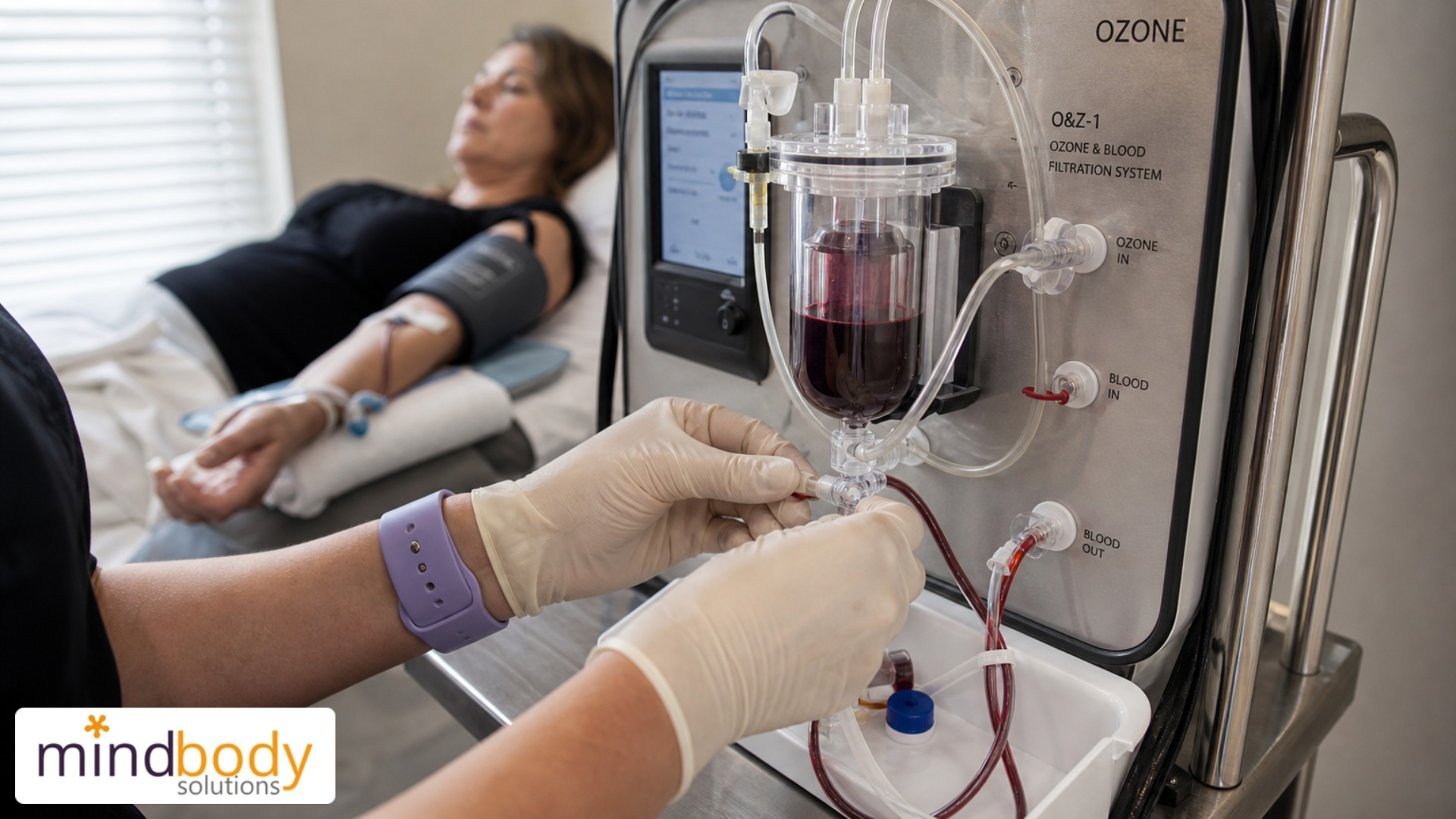
EBOO treatment (Extracorporeal Blood Oxygenation and Ozonation) is an advanced form of EBOO therapy in which blood is drawn, filtered, oxygenated, and infused with ozone before being returned to the body, helping clear inflammatory debris and improve circulation. EBO2 therapy works on a similar principle, combining oxygen and ozone delivery to support cellular repair and reduce systemic inflammatory burden. Ozone IV therapy and ozone blood treatment more broadly have been used to support immune modulation and detoxification in patients dealing with chronic, low-grade inflammation, which is common in autoimmune thyroid conditions.
There’s also a connection worth naming directly: can infection cause weight gain? Chronic, low-grade infections and viral triggers can increase inflammatory cytokines that both worsen thyroid autoimmunity and promote fat storage, which is one reason detox and circulation support matter as much as diet. These EBOO blood treatment and ozone protocols are part of a broader natural health Houston strategy we use to reduce toxin load and inflammation at the source, something cardio alone was never designed to do.
Why Root-Cause Hashimoto’s Treatment Beats Generic Cardio Advice
Root-cause Hashimoto’s treatment beats generic cardio advice because it addresses the actual biological drivers, thyroid antibodies, gut inflammation, hormone shifts, and toxin load, rather than assuming the scale simply needs more calorie burn. How is Hashimoto’s diagnosed properly? It requires testing TSH, free T3, free T4, and thyroid peroxidase (TPO) and thyroglobulin antibodies together, not TSH alone, which is the single most common gap we find in patients who come to us after years of frustration.
How serious is Hashimoto’s disease if it’s left unmanaged? It can progress from mild hypothyroid symptoms to significant metabolic, cardiovascular, and cognitive impact over time, which is exactly why catching and treating it correctly matters more than any workout plan. Our team has guided thousands of patients through this exact process, and the pattern is consistent: once the root cause is identified and treated, Hashimoto belly starts responding in ways that months of cardio never achieved.
Getting Real Answers for Hashimoto Belly in Webster and Houston
Hashimoto belly resolves fastest when it’s treated as a root-cause condition, not a discipline problem, and that starts with comprehensive testing rather than another exercise plan. If you’ve spent years chasing fatigue and mental fog, unexplained weight around your midsection, or thyroid numbers that “look normal” but feel anything but, our Webster, TX clinic can run the full antibody, hormone, and inflammation panels your primary care visit likely skipped.
Mind And Body Solutions serves patients throughout Webster and the greater Houston area with functional medicine protocols built around your actual labs, not a one-size-fits-all diet sheet. Call us at 1 281-616-3816, email info@nutrition-houston.com, or visit nutrition-houston.com to schedule a consultation and find out what’s really driving your Hashimoto belly.
Frequently Asked Questions
Why would strength training and walking be better than cardio for Hashimoto belly?
Strength training and walking don’t spike cortisol the way sustained, high-intensity cardio does, so they support thyroid conversion of T4 to T3 rather than suppressing it. Restorative, adrenal-supportive movement keeps the body out of a chronic stress response, which is the state that drives fat storage around the midsection in the first place.
What lab tests should I ask for if my TSH came back “normal” but I still have symptoms?
A normal TSH alone doesn’t rule out Hashimoto’s, so ask for free T3, free T4, reverse T3, and both TPO and thyroglobulin antibodies tested together. Adding cortisol rhythm testing and a full hormone panel (estradiol, progesterone, DHEA) helps catch the gaps a standard TSH-only screening misses entirely.
How is EBOO therapy different from standard ozone IV therapy?
EBOO (Extracorporeal Blood Oxygenation and Ozonation) draws blood out of the body, filters and oxygenates it, infuses it with ozone, and then returns it, offering a more thorough approach to clearing inflammatory debris than a direct ozone IV infusion. EBO2 therapy works on the same underlying principle of combining oxygen and ozone but is used to specifically target cellular repair and systemic inflammatory load.
How soon might gut treatment start improving thyroid antibody levels?
Once a specific gut trigger is identified through stool analysis, food sensitivity panels, or SIBO breath testing, targeted protocols typically begin reducing inflammation within weeks. Thyroid antibody levels often follow that same downward trend once the underlying gut driver, whether it’s gluten cross-reactivity, a parasite, or bacterial overgrowth, is directly addressed.
If Hashimoto’s runs in my family, does that mean perimenopause will definitely make my symptoms worse?
Hashimoto’s has a hereditary component and disproportionately affects women, but a family history doesn’t guarantee a perimenopausal flare, it simply raises your risk profile. Declining estrogen and progesterone during perimenopause can intensify existing autoimmune activity, which is why testing thyroid antibodies alongside a full hormone panel matters more during this transition than genetics alone.