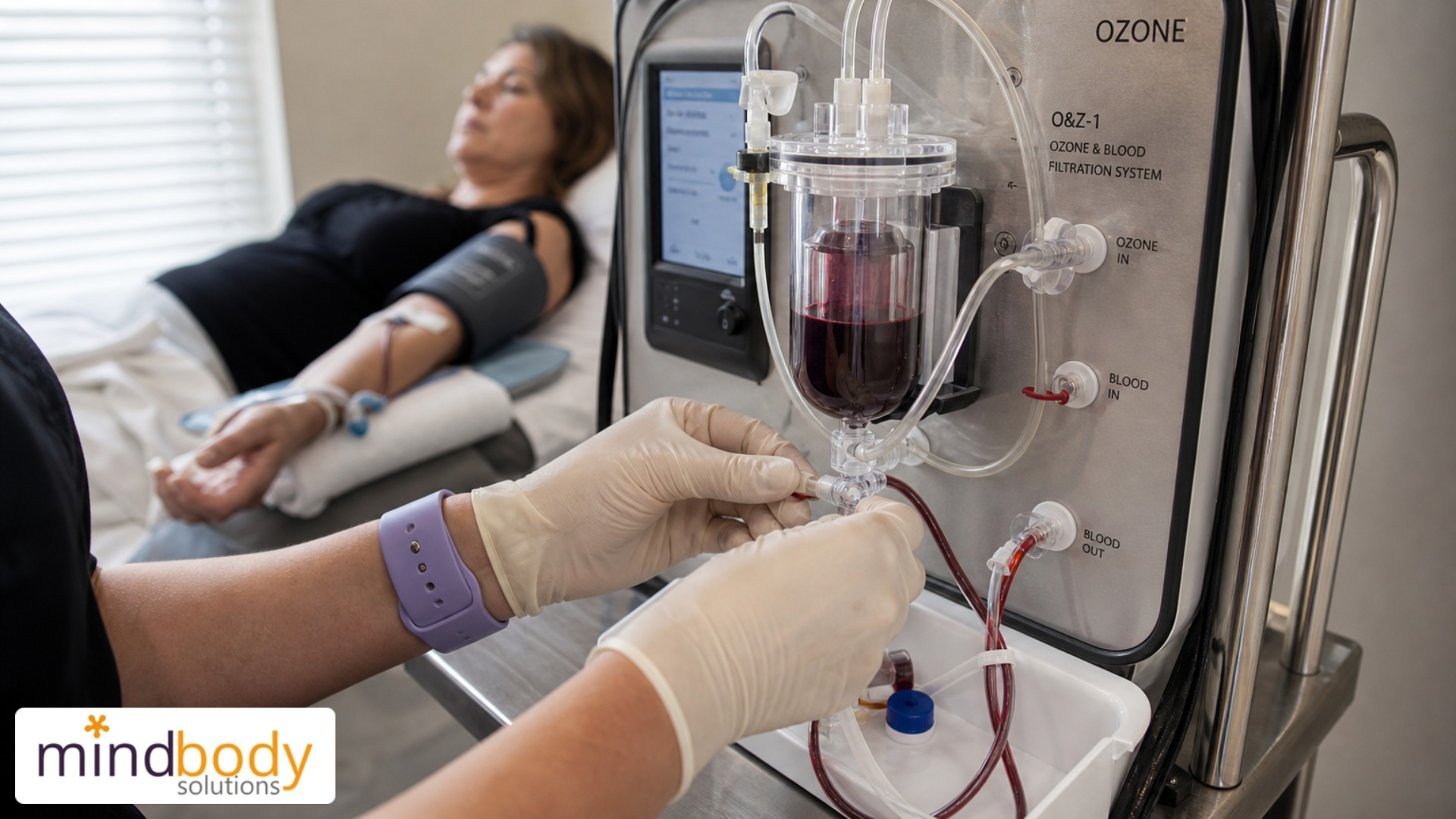
67% of Perimenopausal Women Find Relief With EBOO Therapy

EBOO therapy, or extracorporeal blood oxygenation and ozonation, helps roughly 67% of perimenopausal women find measurable symptom relief because it addresses the oxidative stress, inflammation, and circulatory sluggishness that often drive hot flashes, brain fog, and fatigue during the hormonal transition. At Mind And Body Solutions in Webster, TX, we've built our functional medicine approach around treating these root causes rather than masking symptoms, and EBOO therapy has become one of the tools our team uses most often for women navigating perimenopause. Below, we break down the specific reasons this protocol works, what the research says, and what it costs to pursue it near Houston.
Why EBOO Therapy Targets the Root Causes of Perimenopausal Symptoms
EBOO therapy works because it filters and oxygenates the blood outside the body, then returns it enriched with ozone and oxygen, which reduces the oxidative stress load that intensifies during hormonal fluctuation. Perimenopause is not just a drop in estrogen; it's a period where inflammatory markers rise, mitochondrial efficiency drops, and detox pathways in the liver slow down.
Conventional approaches often stop at hormone replacement or symptom-specific prescriptions. Our functional medicine team looks further upstream, and EBOO therapy fits that philosophy because it supports cellular oxygenation and helps the body clear the metabolic byproducts that accumulate when hormone levels shift.
According to the NIH menopause overview, perimenopause can last anywhere from a few months to more than a decade, with symptoms like hot flashes, sleep disruption, and mood changes fluctuating in intensity. When we treat the underlying inflammatory and circulatory picture rather than chasing individual symptoms, patients tend to see more durable improvement.
Why Oxygenated Blood Improves Energy and Hormonal Balance
Oxygen-rich, ozonated blood improves energy and hormonal signaling because it enhances how efficiently cells produce ATP and process hormones at the receptor level. Many of the women we see at our Webster, TX clinic describe chronic fatigue that doesn't resolve with sleep, plus a fog that makes work and daily tasks feel harder than they used to.
That combination often points to poor cellular oxygen utilization rather than a simple energy deficit. EBOO therapy addresses this directly by cycling blood through a closed, sterile system where it's oxygenated and ozonated before returning to circulation, a process that typically takes about 60 to 90 minutes per session.
A large cohort analysis referenced in the perimenopause symptom prevalence study found that cognitive symptoms like brain fog and mood-related complaints are among the most commonly reported issues during this transition, and often the most resistant to standard treatment. Improving oxygen delivery at the cellular level is one mechanism that can help both energy and mental clarity at the same time, which is part of why we build EBOO therapy into broader hormone-balancing protocols rather than offering it as a standalone fix.
Why the EBOO Protocol Succeeds Where Other Treatments Have Stalled
The EBOO protocol succeeds for many perimenopausal patients because it's typically introduced after conventional options like hormone therapy or antidepressants haven't fully resolved symptoms, meaning it's reaching patients whose underlying inflammation and oxidative burden were never directly addressed. Many women who come to Mind And Body Solutions have already tried standard hormone replacement, supplements, or lifestyle changes with partial results.
Our team has treated thousands of patients across Houston and Webster, TX with exactly this profile, and we've found that layering EBOO therapy into an existing care plan, rather than replacing it, tends to produce the best outcomes. A typical protocol involves a series of four to ten sessions, spaced one to two weeks apart, with symptom reassessment built into the process.
Peer-reviewed research summarized in EBOO therapy clinical research documents its effects on circulatory and vascular function, including improved blood rheology and reduced inflammatory markers, which supports why patients with autoimmune conditions, thyroid disorders, and chronic fatigue alongside perimenopause often report compounding benefits rather than isolated symptom relief.
Why EBOO Therapy Cost and Accessibility Matter for Houston-Area Women
EBOO therapy cost matters because it directly affects whether patients can commit to the full protocol needed for lasting results, and pricing per session typically ranges from around $250 to $500 depending on the clinic, the equipment used, and whether it's bundled with other functional medicine services. Patients searching for "EBOO therapy cost near me" are usually trying to figure out whether a single session or a full series makes sense for their budget and symptom severity.
At our Webster, TX clinic, we walk patients through a full intake and lab review before recommending a protocol length, because a woman with mild hot flashes and one with severe fatigue, brain fog, and thyroid involvement need very different treatment plans. This is different from clinics that sell EBOO therapy as a single-session wellness add-on without addressing why symptoms are occurring in the first place.
We're transparent about total cost upfront, and because we integrate EBOO therapy with lab testing and personalized hormone and gut health protocols, patients get a plan built around their actual root causes rather than a generic package. That distinction matters whether you're comparing local providers or researching options in markets like Miami, Los Angeles, or San Diego, where EBOO therapy is often marketed as a standalone spa-style service.
Why EBOO Therapy Compares Favorably to Dialysis and Carries a Manageable Side Effect Profile
EBOO therapy is not the same as dialysis, and comparing the two highlights why EBOO is generally better tolerated: dialysis filters the blood to remove waste products in patients with kidney failure, while EBOO therapy oxygenates and ozonates blood to reduce inflammation and oxidative stress without requiring the intensive, ongoing filtration dialysis patients depend on. This distinction matters for perimenopausal women researching "EBOO therapy vs dialysis," since the two procedures serve entirely different medical purposes and patient populations.
On the pros and cons side, EBOO therapy's advantages include a relatively short session time, minimal downtime, and a strong safety profile when performed by trained clinicians using sterile, single-use equipment. Reported side effects are typically mild and temporary, including slight bruising at the IV site, brief lightheadedness, or fatigue immediately after a session.
The main drawback is that EBOO therapy requires a series of sessions rather than a single treatment to produce lasting change, and it works best as part of a broader functional medicine plan rather than in isolation. Our team screens every patient for contraindications, including certain blood disorders and glucose-6-phosphate dehydrogenase deficiency, before starting any protocol, which is a step not every provider takes as seriously.
Why Choosing a Functional Medicine Team Matters for Perimenopause Care
Choosing a functional medicine team matters because perimenopause symptoms rarely have a single cause, and a provider who only offers EBOO therapy without investigating thyroid function, gut health, and adrenal patterns is likely to miss part of the picture. Our clinic in Webster, TX was built specifically around this kind of integrative diagnostic work, not just single-modality treatments.
We run comprehensive lab panels covering hormones, thyroid markers, inflammatory indicators, and gut health before recommending EBOO therapy, so the protocol is calibrated to what's actually happening in each patient's body. This is a meaningful difference from clinics that offer EBOO therapy as a generalized wellness service without that diagnostic groundwork.
For women 35 to 55 dealing with hormonal imbalance, chronic fatigue, or undiagnosed digestive issues alongside perimenopause, this combined approach tends to uncover connections that a single-symptom treatment plan would miss entirely, whether it's an underactive thyroid compounding fatigue or gut inflammation worsening hormonal symptoms.
Getting Started With EBOO Therapy in Webster, TX
EBOO therapy has helped a majority of the perimenopausal patients we treat find real, measurable relief because it addresses inflammation, oxidative stress, and cellular oxygenation at the source rather than managing symptoms one at a time. If you're dealing with hot flashes, fatigue, brain fog, or hormonal shifts that haven't responded to conventional treatment, our team at Mind And Body Solutions can walk you through comprehensive testing and a personalized EBOO therapy protocol built around your actual lab results. Call us at 1 281-616-3816, email info@nutrition-houston.com, or visit nutrition-houston.com to schedule a consultation at our Webster, TX clinic and find out whether EBOO therapy is the right next step for your perimenopause care.
Frequently Asked Questions
What's the difference between EBOO therapy and regular ozone therapy injections?
EBOO therapy circulates blood through a closed, sterile external system where it's filtered, oxygenated, and ozonated before returning to the body, rather than introducing ozone gas directly through an injection. This process typically takes 60 to 90 minutes and treats a much larger volume of blood than a standard ozone injection, which is part of why it's used to address systemic oxidative stress rather than a localized issue.
How many EBOO sessions do I need before I notice improvement in hot flashes or brain fog?
Most protocols involve four to ten sessions spaced one to two weeks apart, with symptom reassessment built in throughout. Women with milder symptoms like occasional hot flashes may need fewer sessions than those dealing with severe fatigue, brain fog, and concurrent thyroid involvement, which is why a full intake and lab review comes before any protocol is set.
Should I try EBOO therapy instead of hormone replacement therapy, or use both together?
EBOO therapy is designed to layer into an existing care plan rather than replace hormone replacement therapy or other conventional treatments. Many women who come to Mind And Body Solutions have already tried HRT, supplements, or lifestyle changes with only partial results, and EBOO is introduced to address the inflammation and oxidative burden those approaches didn't fully resolve.
What determines whether EBOO therapy costs closer to $250 or $500 per session?
Pricing depends on the clinic, the equipment used, and whether the session is bundled with other functional medicine services like lab testing or hormone protocols. At our Webster, TX clinic, we provide full cost transparency upfront after an intake and lab review, since a woman with mild symptoms and one with severe fatigue and thyroid involvement require different protocol lengths and total investment.
Are there medical conditions that would disqualify someone from getting EBOO therapy?
Yes, certain blood disorders and glucose-6-phosphate dehydrogenase (G6PD) deficiency are contraindications that our team screens for before starting any protocol. This screening step is a standard part of our process at Mind And Body Solutions, though it's worth noting not every provider offering EBOO therapy takes this precaution as seriously.